

Have you ever wondered why some nights you wake up feeling amazing after just six hours of sleep, while other nights you feel groggy even after eight? The secret isn’t just the quantity of your sleep, but the quality.
The answer lies in understanding two critical concepts: core sleep and deep sleep. Many people use these terms interchangeably, but they are fundamentally different. Learning to optimize both can completely transform your energy levels and daily performance.
A Quick Look at How Sleep Works
Before we dive in, let’s cover the basics. Your sleep is structured in cycles, with each one lasting about 90-110 minutes. Most adults complete 4-6 of these cycles per night.
Each cycle is composed of two main phases:
- NREM (Non-Rapid Eye Movement) Sleep: This phase has three stages, moving from light to very deep sleep.
- REM (Rapid Eye Movement) Sleep: This is the stage where your brain is highly active and most vivid dreaming occurs.
The NREM stages are where deep sleep happens:
- Stage 1 (Light Sleep): The brief transition into sleep where you can be easily awakened. It makes up about 5% of your night.
- Stage 2 (Deeper Sleep): Your heart rate and body temperature drop. This stage accounts for nearly 50% of your total sleep and prepares your body for the next stage.
- Stage 3 (Deep Sleep): Also known as slow-wave sleep, this is the most restorative stage. It’s crucial for physical repair, immune function, and memory consolidation
Now that you understand how sleep cycles work, let’s explore what makes core sleep so special.

What is Core Sleep? The Night’s Most Important Hours
Core sleep is not a single stage but rather a period of time—specifically, the first 3-5 hours of your sleep. It’s called “core” because it contains the highest concentration of the most restorative stages:
deep sleep and REM (Rapid Eye Movement)sleep.
Your body is smart, if you’re sleep-deprived, it will prioritize getting core sleep above all else.
This is why a short night of high-quality, uninterrupted sleep can sometimes feel more refreshing than a long, fragmented one.
The main functions of core sleep are:
- Energy Restoration: Replenishing cellular energy (ATP).
- Physical Repair: Releasing growth hormone and strengthening the immune system.
- Brain Maintenance: Processing memories and preparing neural pathways for the next day
What is Deep Sleep? The Body’s Repair Crew
Deep sleep is a specific stage of the sleep cycle—Stage 3 NREM. During this period, your brain activity shows long, slow delta waves. Your breathing and heart rate are at their lowest points, and your muscles are completely relaxed. This is when you are hardest to wake up.
Think of deep sleep as your body’s intensive care unit. It’s when the most critical repair work gets done. Benefits include:
- Hormone Release: Growth hormone is released to repair tissues and muscles.
- Immune System Boost: Your body produces cytokines, proteins that help fight infection and inflammation.
- Brain Cleaning: The brain’s glymphatic system clears out metabolic waste, including beta-amyloid proteins linked to Alzheimer’s disease.
- Memory Consolidation: Memories are transferred from short-term to long-term storage.
For most adults, deep sleep makes up 13-23% of total sleep time, with longer periods occurring in the first half of the night.
Core Sleep vs. Deep Sleep: The Key Difference
The easiest way to understand the difference is:
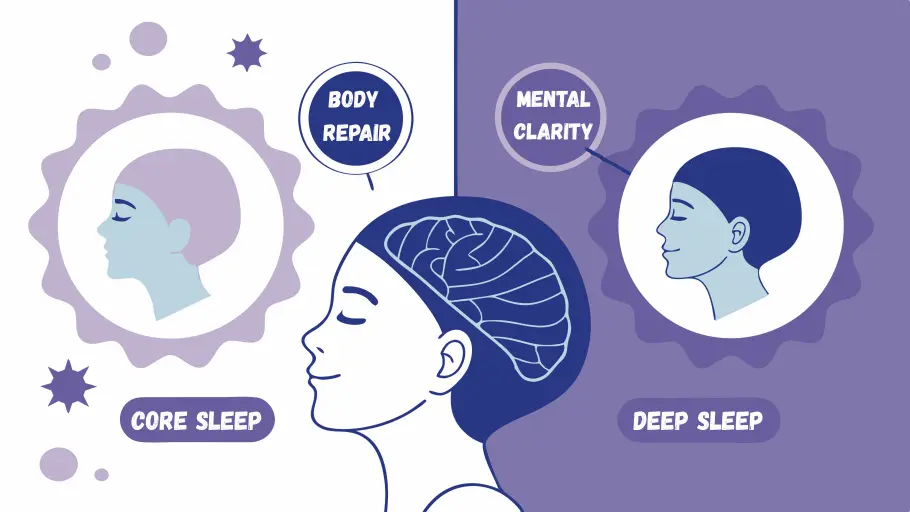
Deep sleep is a component of core sleep. Core sleep is the timeframe that contains most of your deep sleep.
Think of it like a concert. Core sleep is the main event—the first few hours when the headlining acts perform. Deep sleep is one of those headlining acts, playing its most powerful sets during that time.
| Aspect | Core Sleep | Deep Sleep |
| Scope | A period of time: the first 3-5 hours of sleep, containing a mix of all stages | A specific stage of sleep: Stage 3 NREM |
| Duration | ~3-5 hours of your night | ~1-2 hours total (varies by age) |
| Function | Overall restoration, ensuring you feel alert and functional the next day | Intense physical repair, immune support, and memory processing. |
| Brain Activity | A mix of slow delta waves (deep sleep) and faster waves (REM and light sleep). | Characterized exclusively by slow delta waves. |
| When It Occurs | Early portion of the night, continuous block | Primarily first half of night, in cycles |
How Much Do You Need? (Adults, Teens, and Older Adults)
While individual needs vary, here are general guidelines from sleep experts:
- Adults (18-64): Aim for 7-9 hours of total sleep, with 1.5-2 hours of that being deep sleep. Your first 4-5 hours should ideally be uninterrupted to protect your core sleep.
- Older Adults (65+): Typically require 7-8 hours of sleep. Deep sleep naturally decreases with age, often to about an hour, making sleep quality even more critical.
- Teenagers (13-17): Need 8-10 hours of sleep to support growth and development, including ample deep sleep.
Everyone is different. Some people naturally need more or less sleep, but consistently getting less than recommended amounts can hurt your health and daily performance. Missing deep sleep even during a long night can create “sleep debt.”
How Do You Measure Core and Deep Sleep?
While a clinical sleep study (polysomnography) is the gold standard, many modern consumer wearables can provide a good estimate. Devices from brands like Whoop, Oura, Fitbit, and Apple Watch use sensors like accelerometers and heart rate monitors to track your sleep stages.
While not 100% medically accurate, they are excellent tools for tracking trends and understanding how your lifestyle choices affect your sleep quality.
6 Practical Tips to Improve Both Core and Deep Sleep
You can actively improve your sleep quality. Here are six evidence-based strategies:
- Maintain a Consistent Schedule: Go to bed and wake up at the same time daily, even on weekends. This reinforces your body’s natural sleep-wake cycle (circadian rhythm).
- Optimize Your Environment: Keep your bedroom cool (60-67°F or 15-19°C), dark, and quiet. Blackout curtains and a green noise machine can be highly effective.
- Avoid Stimulants and Blue Light: Stop consuming caffeine after 2 PM and turn off all screens at least an hour before bed. The blue light from electronics can suppress melatonin production, the hormone that makes you sleepy.
- Establish a Relaxing Wind-Down Routine: A warm bath, reading a book, gentle stretching, or meditation can signal to your body that it’s time to sleep.
- Exercise Regularly: Aim for at least 30 minutes of moderate exercise most days, but try to finish your workout at least 2-3 hours before bedtime.
- Be Mindful of Evening Habits: Avoid heavy meals, alcohol, and excessive fluids before bed, as they can lead to disruptions that pull you out of deep sleep. A light, healthy snack or a cup of herbal sleep tea is a better choice.

Besides lifestyle changes, many people turn to natural supplements to support better sleep. One popular option is Goli Ashwagandha Gummies, which contain Ashwagandha, a herb known for its stress-reducing and sleep-enhancing properties. Research shows that Ashwagandha can help lower cortisol levels and promote deeper, more restful sleep, making it a helpful addition to your core and deep sleep routine.
Frequently Asked Questions (FAQ)
Q: Why do I feel tired after 8 hours of sleep?
A: It’s likely an issue of sleep quality over quantity. Even with 8 hours, things like stress or a late-night meal can disrupt your sleep cycles and prevent you from getting enough restorative deep sleep, leaving you feeling groggy the next day.
Q: Can you get too much deep sleep?
A: Not really. Your body is smart and regulates its sleep stages very well. Getting extra deep sleep usually just means your body is catching up from sleep debt, an intense workout, or an illness.
Q: My sleep tracker says I got 0 minutes of deep sleep. Is that accurate?
A: Probably not. While trackers are helpful, they only provide an estimate and can sometimes mislabel your sleep stages. The best guide is how you feel. If you consistently see low numbers and feel unrested, try the sleep improvement tips in this guide. If you’re still concerned, it’s always best to consult a specialist.
The Takeaway
Quality sleep isn’t a luxury; it’s a biological necessity. By understanding the crucial difference between core sleep (the essential first hours) and deep sleep (the vital repair stage), you can take targeted steps to improve your rest. Prioritizing both is an investment in your long-term health, focus, and daily energy.
For more information about sleep stages and optimization, consider consulting with a sleep specialist or exploring resources from reputable sleep organizations.