


Creating a consistent morning routine checklist is one of the simplest ways to set the tone for a productive, stress-free day. Instead of rushing through chaotic mornings, you can move through your first hour with calm, clarity, and intention.
A checklist morning routine eliminates guesswork and decision fatigue by giving you a plan to follow — from the moment you wake up until you start work.
This guide walks you through the science, the steps, and five free morning routine templates you can use to design mornings that energize your mind and body every single day.
What Is a Morning Routine Checklist?
A morning routine checklist is a structured list of actions you complete each morning to build momentum and mental clarity. Rather than hoping for a “good morning,” you create one intentionally.
When you use a morning routine planner, you’re training your brain to function efficiently during its sharpest hours.
Core elements often include:
- Physical wellness tasks: hydration, light movement, and stretching
- Mental preparation: journaling, mindfulness, or meditation
- Self-care basics: hygiene, grooming, and dressing
Research in productivity psychology links well-defined morning habits with higher achievement across careers. It’s not about doing more — it’s about doing the right things at the right time.
Why Your Brain Thrives on a Morning Routine Template
Your brain’s cognitive function peaks in the first two to three hours after waking. During sleep, your body clears out mental waste through the glymphatic system, leaving your mind refreshed and ready.
A morning routine template helps you protect this window of clarity. When you spend it scrolling or reacting to emails, you drain your best mental energy.
Neurological Benefits of Morning Routines
- Reduced stress response: Less activation of the amygdala
- Sharper decision-making: Enhanced prefrontal cortex activity
- Consistent daily rhythm: Better circadian alignment and steady energy
Predictable mornings also lower anxiety. When your brain knows what’s coming, it no longer scans for threats — freeing your mental space for creative and focused work later in the day.
The 5 Non-Negotiable Steps for an Energized Morning
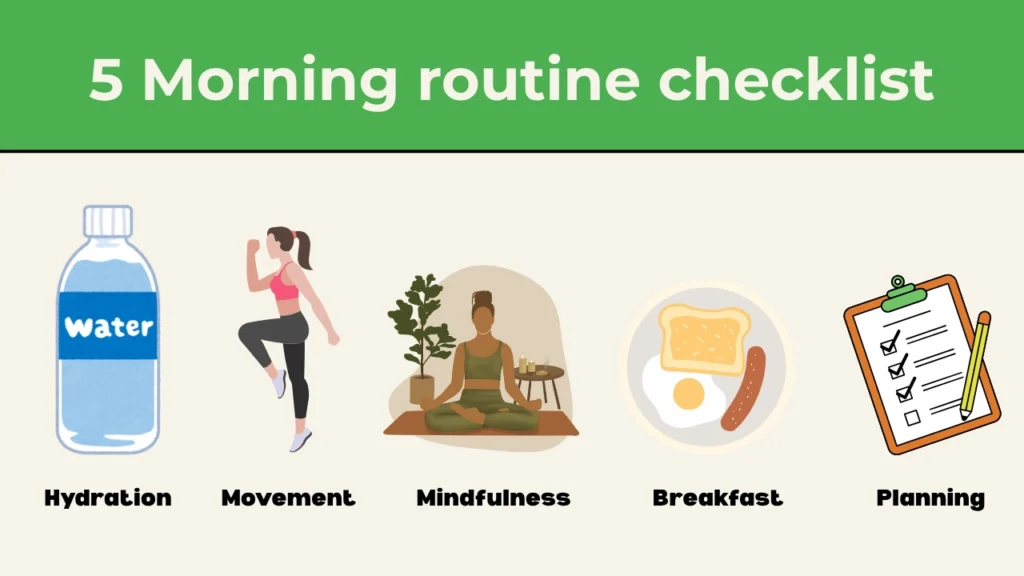
1. Hydrate First Thing
Start by drinking 16–20 ounces of water (a perfect morning drink) as soon as you wake up. After hours of sleep, your body is mildly dehydrated, which can reduce cognitive.
Why it matters:
- Hydration triggers your metabolism
- It tells your brain it’s time to wake up
- Caffeine is more effective after you drink water
Keep a full bottle on your nightstand to make it effortless. Add a squeeze of lemon or a pinch of sea salt for a natural electrolyte boost.
2. Move for 5–10 Minutes
You don’t need a long workout. A few minutes of gentle movement is enough to activate circulation and wake your muscles.
Quick ideas:
- Stretching or yoga flow
- 10-minute brisk walk outdoors
- Simple bodyweight moves like squats or push-ups
Exposure to morning sunlight is especially powerful. Research from Harvard Medical School shows that sunlight early in the day strengthens your circadian rhythm and promotes better sleep at night.
3. Practice Five Minutes of Mindfulness
A few moments of calm can transform your emotional tone for the entire day. Meditation and deep breathing reduce cortisol and improve emotional regulation.
Simple mindfulness options:
- Three slow, deep breaths
- Writing three things you’re grateful for
- Sitting quietly and observing your thoughts
This practice builds emotional resilience so you can respond thoughtfully instead of reactively when challenges arise later.
4. Eat a Protein-Focused Breakfast
Fuel your brain with balanced nutrients. Protein stabilizes blood sugar and helps prevent energy crashes before lunch.
Examples:
- Greek yogurt with berries and almonds
- Eggs with vegetables
- Oatmeal mixed with protein powder and nut butter
Eating breakfast within an hour of waking has been shown to significantly enhance focus and mental clarity throughout the morning. Consistent timing also helps regulate your sleep–wake cycle and energy levels throughout the day.
5. Plan Your Top 3 Priorities
Before opening your inbox or social media, take five minutes to identify your three most important tasks.
Try this:
- Check your calendar
- List your top three goals
- Time-block your first priority task
When you set your direction before reacting to others, you work from clarity instead of chaos.
What to Avoid in Your Morning Routine Planner
Not all morning activities support your focus. Some actually sabotage it.
Avoid these early-morning traps:
- Checking email: Pulls you into other people’s priorities.
- Scrolling social media: Triggers dopamine loops that derail focus.
- Reading the news: Negative headlines can raise baseline anxiety by 27% (American Psychological Association).
Save these for mid-morning once your key work is done and your mind is less vulnerable to distraction.
5 Free Morning Routine Templates to Customize

Use these morning routine idea templates to design a routine that fits your lifestyle, personality, and goals.
Template 1: Daily Essentials Checklist
Ideal for busy mornings when time is short — around 20–30 minutes.
Checklist:
- Drink 16 oz water
- Move for 5 minutes
- Shower and get ready
- Eat breakfast
- Review top 3 priorities
Print or save this as your morning routine chart and check each item daily for motivation and accountability.
Template 2: Blank Customizable Template
Build your perfect routine from scratch. This morning routine template lets you list activities, set time blocks, and add personal notes.
Best for:
- Flexible or changing schedules
- People testing new habits
- Full personalization
Leave a 15–20% time buffer between activities so you don’t feel rushed.
Template 3: Weekly Morning Routine Chart
A seven-day visual grid helps you spot patterns and track consistency.
Benefits:
- Reveals skipped habits (e.g., exercise on Mondays)
- Shows progress over time
- Encourages accountability through visible data
Keeping track of how you act really helps build habits because it shows you clearly how you are doing and keeps you motivated to keep going.
Template 4: Mindfulness-Focused Checklist
Designed for emotional balance and stress management, not just productivity.
Sections include:
- Meditation or breathwork
- Gratitude journaling
- Positive affirmations
- Mood tracking
If you’re recovering from burnout or managing anxiety, this template can help you reconnect with calm energy and focus.
Template 5: Productivity Morning Planner
Perfect for professionals or entrepreneurs who want structure and measurable progress.
Features:
- Top 3 priorities
- 30-minute time blocks (6:00–10:00 AM)
- Energy tracking
- Space for notes or next-day prep
Morning time-blocking can add 2–3 hours of deep work per day. Research shows you’re 76% more likely to complete a task when you assign it a specific time slot.
Bonus: Morning Routine Chart for Kids
Children thrive on structure too. A simple morning routine chart helps them develop independence and reduces stress for parents.
Tips:
- Use picture icons for each task (brush teeth, get dressed, eat breakfast)
- Include checkboxes and small rewards
- Laminate the chart for easy reuse
Child development experts say predictable routines lower morning resistance and improve mood — by up to 60% in some families.
3 Tips to Make Your Routine Stick
1. Start Small — Just Two Habits
Trying to change everything at once leads to burnout. Research from University College London found that habits take around 66 days to become automatic.
Start with:
- Hydration + Movement
- Add new habits after 30 days of consistency
Aim for 80% adherence instead of perfection — consistency always wins.
2. Prepare the Night Before
Evening preparation removes friction and boosts morning success. It can reduce decision-making stress.
Try this tonight:
- Lay out your clothes
- Prep breakfast ingredients
- Set your coffee maker
- Place your essentials (keys, wallet) by the door
- Write your top three tasks for tomorrow
When mornings are ready for you, following through becomes effortless.
3. Build Flexibility Into Your System
Rigid routines break easily when life gets unpredictable. Instead, create a “minimum viable routine” — three essential steps you can complete even on tough mornings.
Remember:
- Missing a day isn’t failure
- Return to your routine tomorrow
- Be kind to yourself
Self-compassion, not self-criticism, predicts long-term success.
How Long Until You See Results?
Small shifts appear within a week. After a month, mornings start to feel easier and more intentional.
Expected timeline:
- Week 1: Less stress, smoother mornings
- Weeks 2–3: Sharper focus and better work quality
- Weeks 4–6: Improved energy and sleep patterns
- Week 8+: Higher productivity and emotional balance
Final Thoughts: Your Morning Shapes Your Life
A peaceful, productive morning isn’t about perfection — it’s about intention.
With a simple morning routine checklist, you can transform chaotic starts into calm, energizing ones.
You don’t need fancy tools or endless motivation. Just pick one template, personalize it, and try it for a week.
Pay attention to how your energy and focus change — that’s your best feedback.
Your best mornings are waiting. All it takes is one intentional start tomorrow.