
The best exercises can actually make you feel less tired. It might seem strange to exercise when you’re already worn out, but it works. The right exercises can give you more energy, not take it away. The secret is to pick the right exercises and do them the right amount.
Let’s talk about how exercise gives you energy, what exercises work best, and how to make sure exercise helps, not hurts, your energy levels.
How Exercise Helps Your Energy: The Science
The good feeling you get after exercising is real. When you work out, your body sends oxygen and nutrients around better. It also helps the parts of your cells that make energy (mitochondria) to make more energy.
Actually, doing cardio at a normal level can increase the number of these energy-making parts by up to 50% in just two months. You also get a boost of chemicals that make you feel good and give you more energy for hours.
But there’s a limit. If you exercise too much without resting, it can be bad. The best exercise for energy is a mix of different types, done regularly, and fits what your body needs.
How Different Exercises Change Energy Levels
Not all exercise impacts your energy in the same way. Let’s break down how different training styles can influence your vitality:
1. Cardio: Boost Your Energy
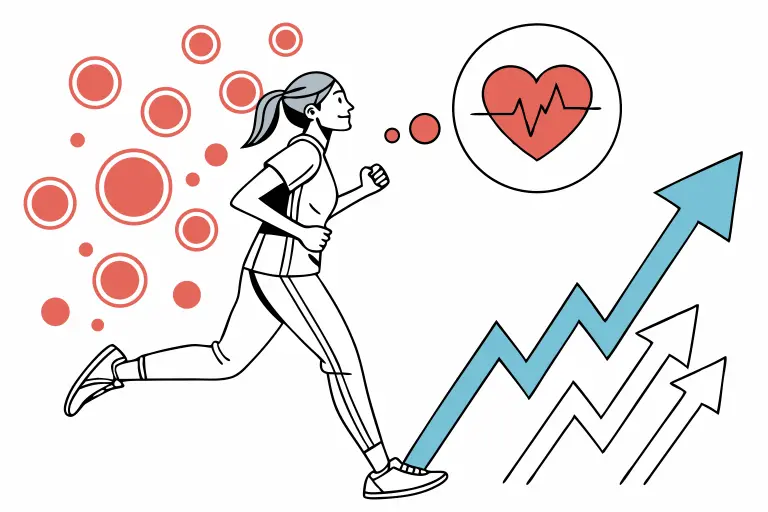
Doing aerobic exercise like walking, swimming, or biking helps your body use oxygen better. This is important for having energy every day. Cardio helps you:
- Get more oxygen (up to 20% more)
- Sleep better (10-15% improvement)
- You’ll feel energized for up to 6 hours after your workout.
Doing cardio for 20-30 minutes, like in the morning as part of your morning workout routine, can make you feel good all day. Moving in the morning helps your body’s natural energy cycle, giving you a clean energy boost.
2. Build Muscle: Improve Your Metabolism
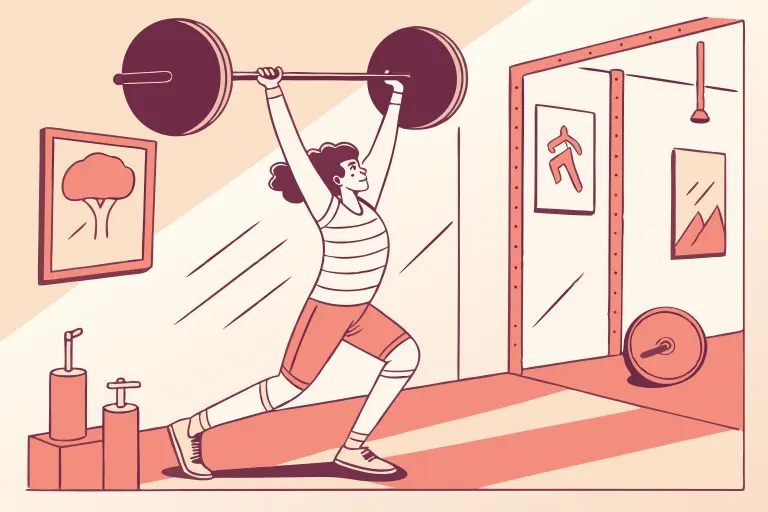
Strength training helps you build muscle. More muscle speeds up your metabolism, so you burn more energy even when you’re not active. It also:
- Helps your body use sugar better.
- Makes your body work better with insulin.
- Gives you fast energy through a special system.
Do exercises that use many muscles, like squats, push-ups, and rows. Doing these 2 or 3 times a week can boost your energy without pushing yourself too hard.
3. Work that Makes You Flexible: Save and Reuse Energy
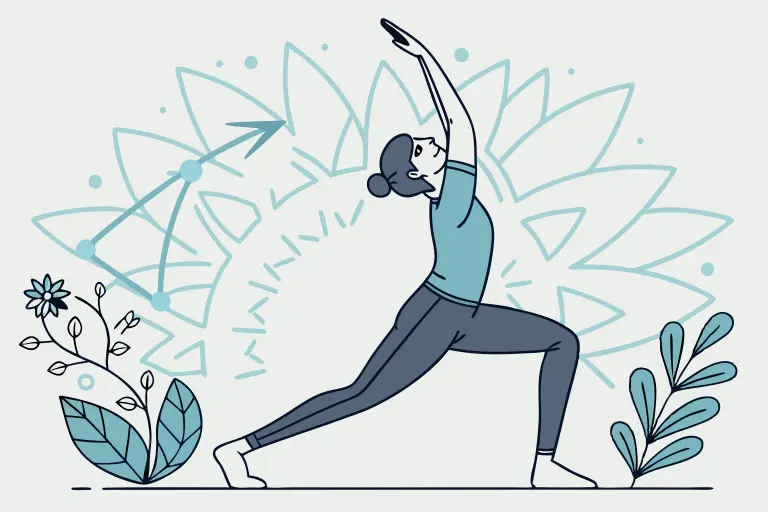
Stretching doesn’t create energy like some exercises, but it helps you save energy. It makes your movements easier. Here’s how it helps:
- Better blood flow
- Less muscle tightness
- Better breathing and feeling calm
Doing things like yoga or stretching helps your body relax and calm down. This can reduce inflammation, which often makes you tired. Even 10 minutes a day can help a lot.
Don’t Make This Mistake: Exercising Too Much
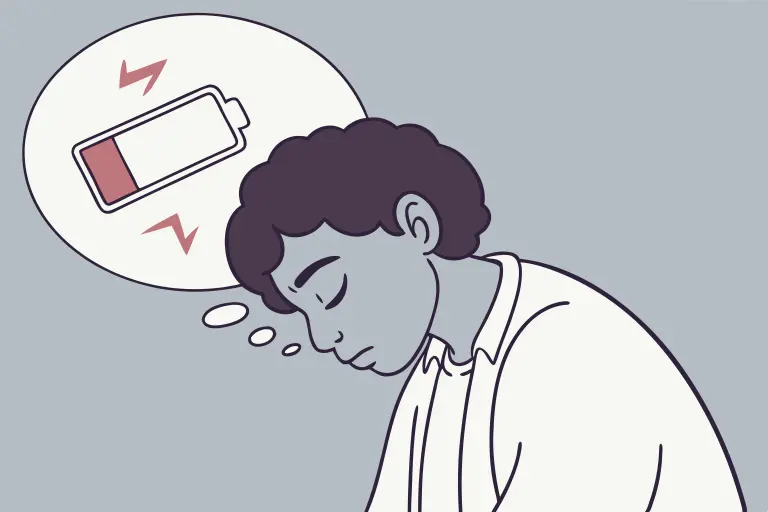
If you exercise too much without resting, you can get overtraining syndrome. This makes you feel tired instead of energized. Look out for these signs:
- Feeling tired all the time
- Can’t sleep well, even when very tired
- Not doing as well as usual
- Changing moods or getting annoyed easily
Working out too much can increase a hormone called cortisol and use up your body’s energy stores. This can make you feel tired. It’s better to have a plan that includes easy workouts and days off.
How to Exercise to Get More Energy
To get more energy from exercise, follow this plan:
| Type of Exercise | Optimal Frequency | Best Duration | Energy Impact |
|---|---|---|---|
| Cardiovascular | 3 to 5 times a week | 20-40 minutes | Improves your ability to use oxygen and your mitochondrial function |
| Strength Training | 2 or 3 times a week | 30-45 minutes | Speeds up your metabolism and helps your body use energy better |
| Flexibility Work | Every day | 10-15 minutes | Improves blood flow and saves energy |
When you do it is important
- Do cardio in the morning. It works with your body’s natural cortisol levels and helps you think more clearly.
- Do strength training in the afternoon. This is when your body is best at physical activity.
- Stretch in the evening. It helps your body recover and sleep better.
Even a short 10-minute workout in the middle of the day can give you more energy than coffee.
Eat smart to give your body energy
Working out without the right food can be bad. Here’s how to eat for energy:
- Before you work out: Eat carbs (1–3 grams for every kilogram you weigh) 1–4 hours before. This helps keep your blood sugar steady.
- After you work out: Eat protein (0.3–0.5 grams for every kilogram you weigh). This helps fix your muscles and get your energy back.
- Hydration: Make sure you drink enough water and electrolytes. This helps prevent the tiredness that can happen even when you’re just mildly dehydrated.
Also, pay attention to what you eat when you’re not working out. Eating healthy foods and drinking enough water gives you energy all day long.
Focus on getting better to have the most energy.
Your body gets stronger when you rest and heal. Here’s how to help your body recover:
- Plan to take it easy for a week every 4 to 6 weeks.
- Make sure you sleep for 7 to 9 hours each night.
- Do things like walking or easy yoga to help your body recover.
- Check your heart rate when you’re resting. If it goes up, you might need to take a break.
Being in the sun, especially in the morning, can also make you feel more energetic during the day. This is because it helps your body’s natural clock. If you don’t have enough of certain vitamins, like liquid B12, taking supplements might help. you can find more about the best supplements for mitochondrial function to enhance your energy production.
Your Energy-Building Exercise Prescription
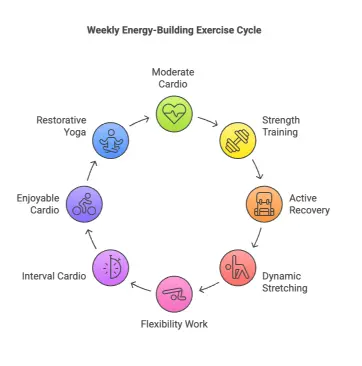
Here’s an example of a balanced weekly schedule:
- Monday: 30 minutes of cardio (like running) + 10 minutes of stretching
- Tuesday: Strength training (like lifting weights) + 10 minutes of exercises to help you move easily
- Wednesday: Easy exercise (like walking or yoga
- Thursday: Cardio with short bursts of high intensity, plus exercises to help you move better
- Friday: Exercises to build strength (using different moves)
- Saturday: Longer cardio that’s enjoyable (like a hike, swim, or bike ride)
- Sunday: Relax or do yoga to help you recover
This plan helps you balance hard workouts with rest. It works on all the parts of your body that make and save energy.
Last Thoughts
The best exercise for energy isn’t always about pushing yourself. It’s about exercising in a smart way. Moving your body in a planned way helps your body make energy, makes you stronger, and helps you do better every day.
Think of your workouts as a way to invest in your energy. If you do them the right way, even quick workouts that you do regularly can make you feel better. You’ll have more energy, be able to focus better, and feel more alive every day.